Selecting the right liquid filling machine capacity is essential for achieving efficient production, minimizing downtime, and maximizing return on investment. Whether you manufacture edible oils, syrups, detergents, chemicals, cosmetics, or other liquid products, choosing a machine with the appropriate capacity ensures smooth operations and supports future business growth.
Many businesses focus only on machine price when purchasing equipment, but capacity is equally important. A machine that is too small may limit production, while an oversized machine can lead to unnecessary costs.
In this guide, we explain how to select the right liquid filling machine capacity for your production requirements.
What Is Liquid Filling Machine Capacity?
Liquid filling machine capacity refers to the number of containers a machine can fill within a specific period. Capacity is typically measured in:
- Bottles per minute (BPM)
- Bottles per hour (BPH)
- Liters per hour
The actual output depends on factors such as product viscosity, container size, number of filling heads, and machine automation level.
Why Choosing the Right Capacity Matters
Selecting the proper machine capacity offers several benefits:
- Improved production efficiency
- Reduced labor costs
- Consistent product output
- Better utilization of equipment
- Lower operating expenses
- Easier production planning
A properly sized liquid filling machine helps businesses meet customer demand without overspending on equipment.
Step 1: Calculate Your Daily Production Requirement
The first step is understanding your production goals.
For example:
- Daily production target: 10,000 bottles
- Working hours per day: 8 hours
Required hourly output:
10,000 ÷ 8 = 1,250 bottles per hour
This calculation provides a starting point for determining the machine capacity you need.
Step 2: Consider the Type of Liquid
Different liquids require different filling speeds.
Low-Viscosity Liquids
Examples:
- Water
- Juice
- Sanitizer
- Thin chemicals
These products flow easily and allow higher filling speeds.
Medium-Viscosity Liquids
Examples:
- Edible oils
- Syrups
- Liquid soap
These require moderate filling speeds.
High-Viscosity Liquids
Examples:
- Honey
- Creams
- Lotions
- Gels
- Thick detergents
Thicker products generally require slower filling cycles and specialized filling systems such as piston fillers.
Step 3: Evaluate Container Size
Container size directly affects machine output.
For example:
- A machine filling 100 ml bottles can operate much faster than one filling 5-liter containers.
- Larger containers require longer filling times.
Always calculate capacity based on the actual bottle sizes used in production.
Step 4: Choose the Right Number of Filling Heads
The number of filling nozzles significantly impacts production speed.
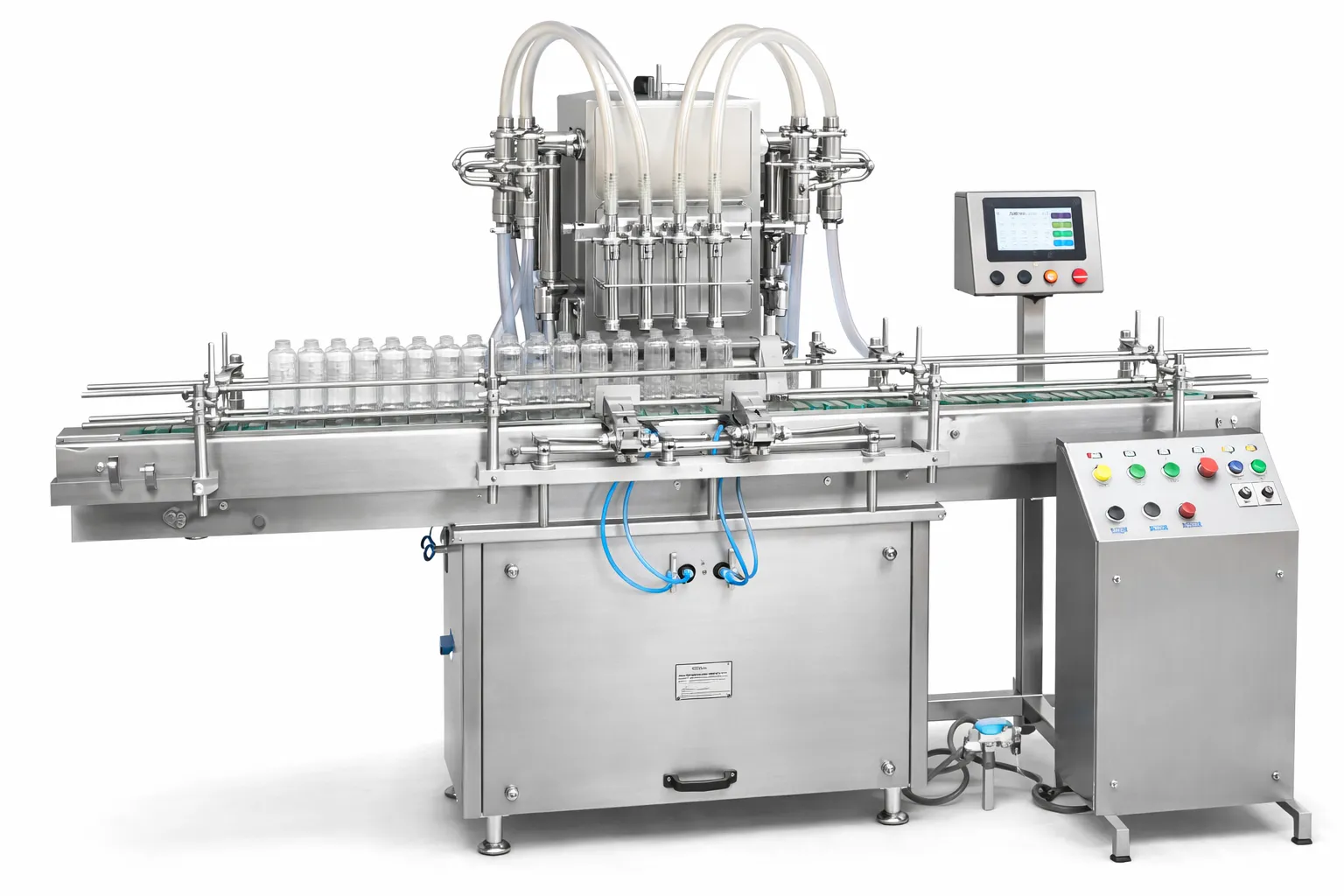
2-Head Liquid Filling Machine
Suitable for:
- Small businesses
- Low-volume production
4-Head Liquid Filling Machine
Suitable for:
- Medium-scale production
- Growing businesses
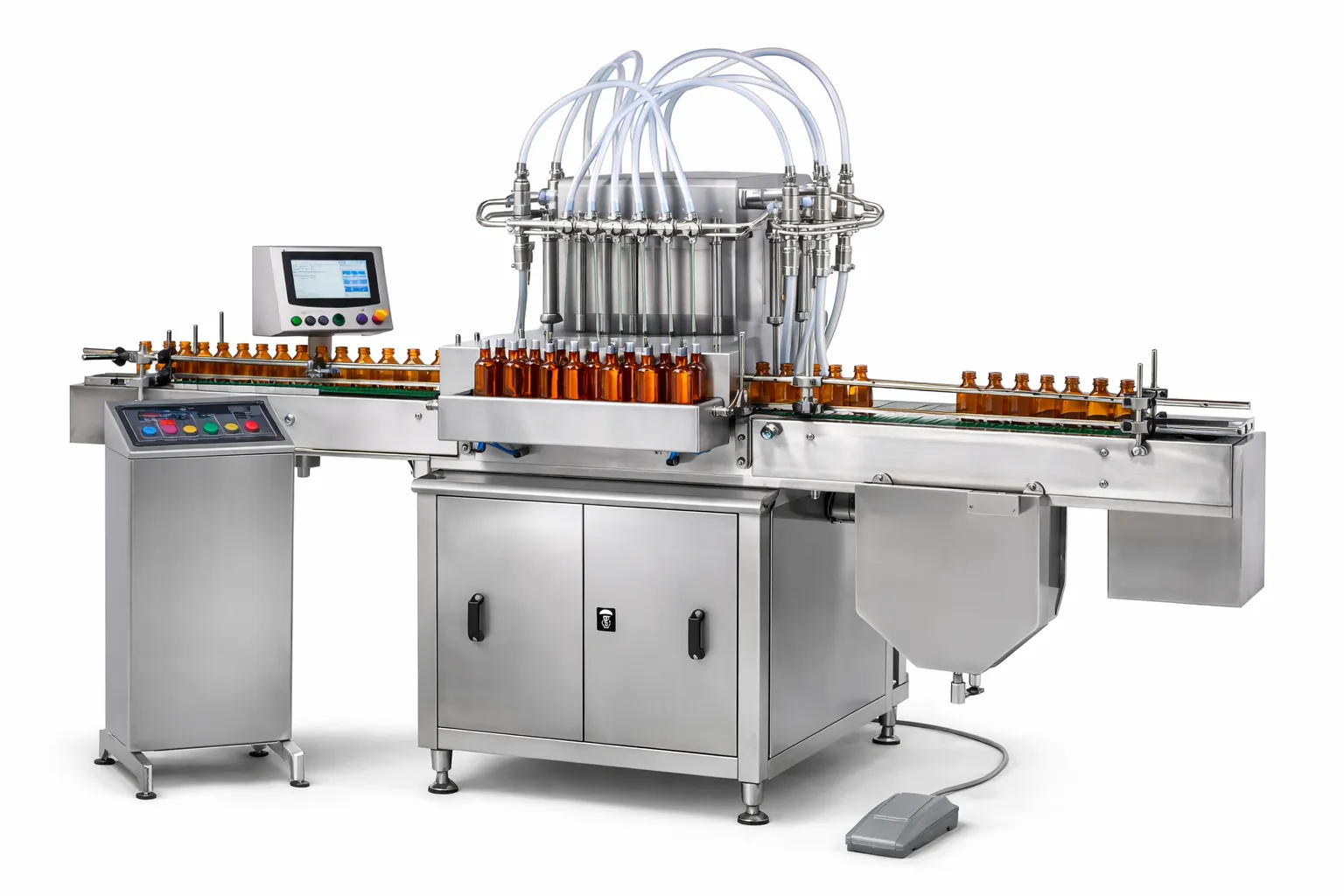
6-Head, 8-Head, and 12-Head Liquid Filling Machines
Suitable for:
- High-volume production
- Large manufacturing facilities
Increasing the number of filling heads generally increases machine output and efficiency.
Step 5: Decide Between Semi-Automatic and Automatic Machines
Semi-Automatic Liquid Filling Machines
Ideal for:
- Startups
- Small production runs
- Businesses with limited budgets
Benefits include lower investment costs and operational flexibility.
Automatic Liquid Filling Machines
Ideal for:
- Medium and large-scale production
- Continuous manufacturing operations
Benefits include:
- Higher production speed
- Reduced labor requirements
- Consistent filling accuracy
- Better production efficiency
Step 6: Plan for Future Business Growth
One of the most common mistakes is purchasing equipment based only on current requirements.
Before making a decision, consider:
- Future production increases
- New product launches
- Market expansion
- Seasonal demand fluctuations
Choosing a machine with some additional capacity can help avoid costly upgrades later.
Common Mistakes to Avoid
Buying a Machine with Insufficient Capacity
A machine that cannot meet production demand may create bottlenecks and reduce profitability.
Purchasing Excessive Capacity
Oversized equipment can increase initial investment and operating costs without delivering additional value.
Ignoring Product Characteristics
Capacity figures vary depending on the liquid being filled. Always evaluate machine performance based on your actual product.
Overlooking Future Requirements
Production needs often increase as businesses grow. Selecting scalable equipment is a smart long-term investment.
How We Help Businesses Select the Right Capacity
We provide liquid filling machine solutions tailored to your production requirements.
Our range includes:
- Automatic Liquid Filling Machines
- Semi-Automatic Liquid Filling Machines
- Multi-Head Filling Machines
- Piston Filling Machines
- Oil Filling Machines
- Syrup Filling Machines
- Chemical Filling Machines
- Shampoo and Detergent Filling Machines
- Viscous Liquid Filling Machines
Our experts evaluate your product type, container size, production volume, and growth plans to recommend the most suitable machine capacity for your business.
Conclusion
Selecting the right liquid filling machine capacity is crucial for maintaining efficient production and achieving long-term business success. By considering production volume, liquid characteristics, container sizes, automation requirements, and future growth plans, businesses can make informed purchasing decisions and maximize their investment.
If you are planning to invest in a liquid filling machine, choosing the correct capacity today can help improve productivity, reduce costs, and support future expansion.
Contact us today to find the ideal liquid filling machine capacity for your production line and business goals.