Purchasing a liquid filling machine is a significant investment that can impact production efficiency, product quality, and profitability for years to come. Whether you operate in the food, beverage, pharmaceutical, cosmetic, or chemical industry, choosing the wrong liquid filling machine can lead to costly downtime, production bottlenecks, and unnecessary expenses.
Understanding the most common mistakes buyers make can help you select the right equipment and maximize your return on investment.
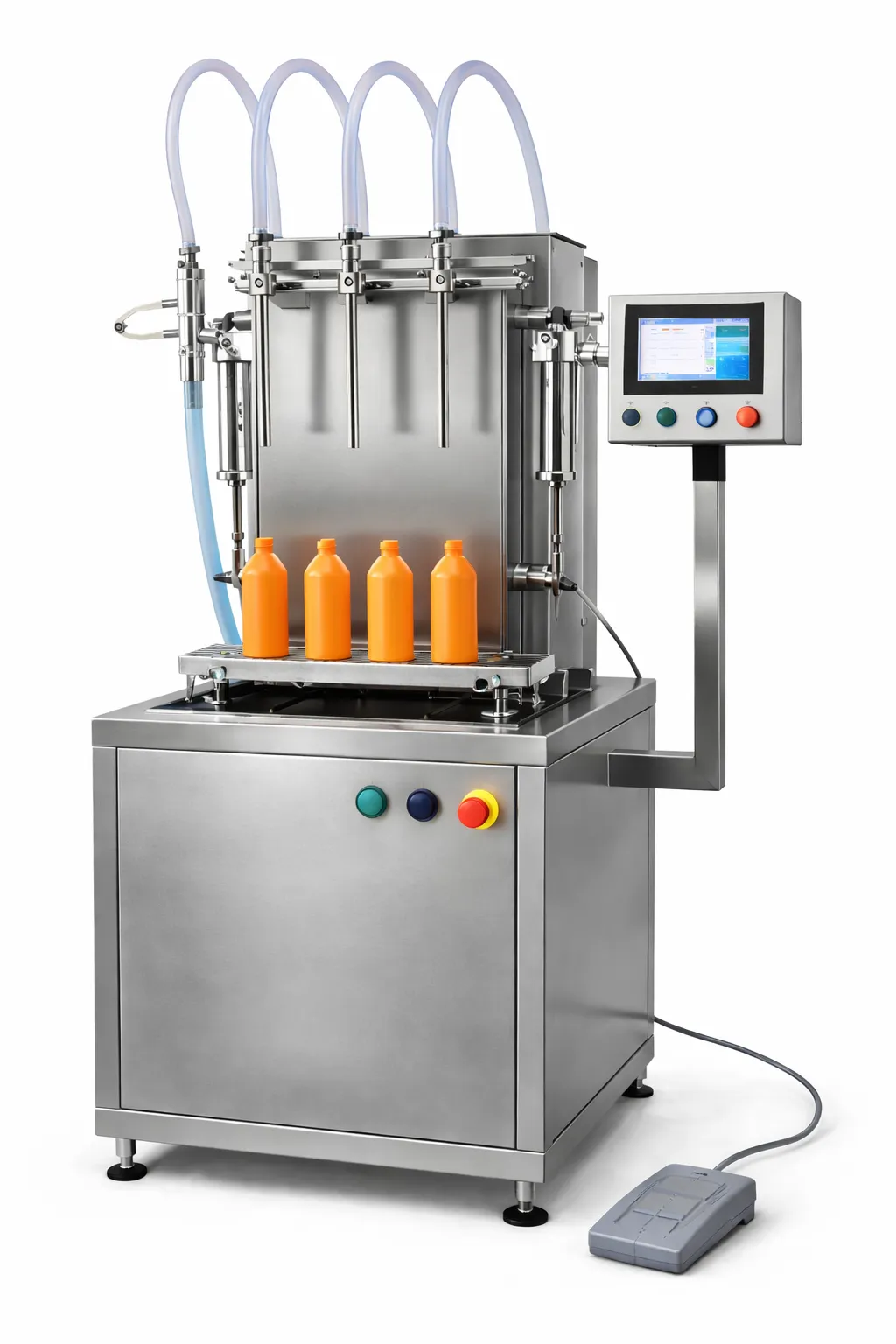
1. Choosing a Liquid Filling Machine Based Only on Price
One of the biggest mistakes buyers make is selecting the cheapest liquid filling machine available.
While a lower upfront cost may seem attractive, inexpensive machines often come with:
- Lower filling accuracy
- Reduced reliability
- Higher maintenance costs
- Limited support and spare parts availability
- Shorter equipment lifespan
Instead of focusing solely on purchase price, consider the total cost of ownership, including maintenance, efficiency, productivity, and long-term performance.
2. Ignoring Product Characteristics
Not all liquids behave the same way.
Many buyers purchase a liquid filling machine without considering factors such as:
- Viscosity
- Foaming properties
- Particle content
- Product temperature
- Corrosiveness
For example:
- Water may work well with gravity liquid filling machines.
- Honey often requires piston liquid filling machines.
- Foamy detergents may need specialized filling nozzles.
- Corrosive chemicals may require specific materials and seals.
Always match the liquid filling technology to the product being filled.
3. Underestimating Future Production Needs
A liquid filling machine that meets today’s production requirements may become a bottleneck tomorrow.
Many businesses purchase equipment based only on current demand and later discover that the machine cannot keep up with growing orders.
Consider:
- Future sales growth
- Additional production shifts
- New product lines
- Market expansion plans
Choosing a liquid filling machine with room for expansion can save substantial upgrade costs later.
4. Selecting the Wrong Level of Automation
Some businesses overspend on highly automated systems they do not need, while others buy manual equipment and quickly outgrow it.
Manual Liquid Filling Machines
Best for:
- Startups
- Small production runs
Semi-Automatic Liquid Filling Machines
Best for:
- Growing businesses
- Medium production volumes
Fully Automatic Liquid Filling Machines
Best for:
- High-volume manufacturing
- Continuous production environments
Evaluate your production goals carefully before deciding on the level of automation.
5. Overlooking Filling Accuracy Requirements
Inaccurate filling can lead to:
- Product giveaway
- Regulatory issues
- Customer complaints
- Increased waste
Industries such as pharmaceuticals, cosmetics, and food processing often require strict filling tolerances.
Always verify:
- Filling accuracy specifications
- Repeatability performance
- Calibration procedures
Request a product test before purchasing a liquid filling machine.
6. Not Considering Container Variations
Some liquid filling machines work well with one bottle size but require significant adjustments for others.
Before buying, consider:
- Bottle shapes
- Container sizes
- Neck diameters
- Future packaging changes
A flexible liquid filling machine can handle multiple container formats and reduce changeover time.
7. Ignoring Cleaning and Maintenance Requirements
Cleaning and maintenance affect both productivity and operating costs.
Liquid filling machines that are difficult to clean can lead to:
- Longer downtime
- Product contamination risks
- Increased labor costs
Look for features such as:
- Easy-access components
- Tool-free disassembly
- CIP (Clean-In-Place) compatibility
- Simple maintenance procedures
8. Failing to Verify Material Compatibility
The liquid filling machine’s construction materials must be compatible with the product.
For example:
- Food products often require stainless steel construction.
- Corrosive chemicals may require specialized materials.
- Pharmaceutical products may require sanitary designs.
Check compatibility for:
- Tanks
- Pumps
- Nozzles
- Hoses
- Seals and gaskets
Using incompatible materials can lead to premature wear and contamination issues.
9. Ignoring After-Sales Support
Even high-quality liquid filling machines occasionally require maintenance or replacement parts.
Before purchasing, verify:
- Technical support availability
- Spare parts inventory
- Service response times
- Training programs
- Warranty coverage
Reliable after-sales support can significantly reduce downtime and repair costs.
10. Not Requesting a Product Trial
Many buyers purchase a liquid filling machine based solely on brochures or specifications.
A product trial allows you to evaluate:
- Filling accuracy
- Production speed
- Foaming behavior
- Product flow characteristics
- Container handling performance
Testing your actual product is one of the most effective ways to ensure the liquid filling machine meets your requirements.
11. Forgetting About Regulatory Requirements
Industries such as food, pharmaceutical, and cosmetics often have strict compliance standards.
Verify that the liquid filling machine meets relevant requirements, including:
- GMP standards
- Industry-specific regulations
- Quality certifications
- Safety requirements
Failure to comply can result in costly modifications later.
12. Buying Without Considering Integration Needs
Many production facilities eventually add:
- Capping machines
- Labeling machines
- Conveyors
- Coding systems
- Inspection systems
Choose a liquid filling machine that can integrate with future packaging equipment to avoid compatibility issues and costly upgrades.
Questions to Ask Before Buying a Liquid Filling Machine
Before making a final decision, ask:
- What products will I fill?
- What production speed do I require?
- What level of accuracy is needed?
- Will production volume increase in the future?
- How many container sizes will I use?
- What maintenance is required?
- Is technical support available?
- Can the machine be upgraded later?
The answers to these questions can help prevent costly purchasing mistakes.
Contact Us
Choosing the right liquid filling machine is a critical decision that can impact your production efficiency, product quality, and long-term profitability. By avoiding common purchasing mistakes and selecting equipment that matches your product characteristics, production goals, and future growth plans, you can make a smart investment that delivers reliable performance for years to come.
Whether you need a semi-automatic liquid filling machine for a growing business or a fully automatic liquid filling line for high-volume production, our team can help you find the right solution for your specific application.
Contact us today to discuss your requirements, request a product trial, or receive a customized quotation. Our experts are ready to help you choose the most efficient and cost-effective liquid filling machine for your production needs.